PayPal casinos in the UK in 2026: what the licence register, the 10x cap and the stake tier mean for a session
 Available in GB
PayPal works at UK-licensed casinos, but the e-wallet itself changes almost nothing about how the market is regulated. The same Gambling Commission licence gates every deposit a British player makes, the same GAMSTOP self-exclusion sits over every account, and the same £5 or £2 slot stake and ID check apply whether the funds arrive by PayPal, debit card or bank transfer. What PayPal actually shifts is the timeline for withdrawals once verification has cleared, and the friction at the cashier — which is where ten licensed brands begin to differ in ways the public register does not record.
Data current as of 23 September 2026 — checked against the Gambling Commission’s public register of remote casino operating licences.
Table of Contents
- How PayPal fits at a UK casino, and what settlements look like at the cashier
- The UK casino jurisdiction: 139 businesses holding active remote casino licences
- Inside the register’s fundamentals: 1,065 active and 361 white-label domain entries
- Responsible gambling at a UK PayPal casino: GAMSTOP, stake caps and the ID check
- PayPal is not the anonymity play some readers assume
- Payout speed and what verification actually costs you in time
- How the ten licensed operators stack up on the register
- The ten licensed operators, one by one
- How long the 10x bonus cap actually takes to clear
- Frequently asked questions
How PayPal fits at a UK casino, and what settlements look like at the cashier
PayPal first stopped processing payments for online gambling in 2003, then resumed the service from 2010 — and only in jurisdictions where online gambling is regulated. Great Britain, with its Gambling Commission licensing regime, sits inside that set. The company’s UK-facing operation runs on a Luxembourg banking licence PayPal has held since 2008, the legal scaffolding that lets a cashier page in Bristol or Belfast move money in and out without breaking the e-money rules.
For a UK casino, the practical upshot of using PayPal is straightforward. Deposits clear as soon as the player confirms them; withdrawals, once identity verification has finished, go back to the same PayPal account rather than a bank or card. There is no crypto-conversion, no anonymous routing, no jurisdiction-hopping. Coral, for instance, runs its casino under licence 054743-R-330863-014, held by LC International Limited, and the cashier there behaves the way every UK-licensed cashier does when PayPal is the chosen method. A deposit lands in seconds. A withdrawal waits on the verification outcome, then arrives in the PayPal balance within hours rather than days.
PayPal at a UK casino is, in other words, a friction-reduction choice rather than a different kind of gambling. The licence that lets the casino operate, the stake cap that limits each spin, the GAMSTOP exclusion that follows the player across brands, the ID check that has to clear before the first deposit — none of those bend because the wallet is PayPal. What bends is the time between “the casino approved my withdrawal” and “the money is in my account”, and that is the only place one cashier can honestly outdo another.
The history is worth a paragraph, since the shape of the company explains why a UK casino is willing to host it on the cashier in the first place. PayPal started life as Confinity in December 1998, founded by Max Levchin, Peter Thiel and Luke Nosek. Confinity merged with Elon Musk’s X.com in March 2000 and the combined company took the PayPal name in June 2001. eBay acquired PayPal on 3 October 2002 for $1.5 billion, then spun it off as an independent publicly traded company on 18 July 2015. By 2022 PayPal operated in 202 markets with 426 million active registered accounts; by 2023 it reported $29.771 billion of revenue. None of that scale matters at a cashier page, but it is the reason a £10 deposit settles in a few seconds and a £500 withdrawal settles in a few hours. PayPal’s UK retail-banking-grade plumbing is what the casino is plugging into.
One structural wrinkle catches UK players out, and it predates any casino rule. Under UK consumer protection law, Section 75 of the Consumer Credit Act 1974 protects card purchases between £100 and £30,000 — but the protection does not apply where PayPal is interposed as the payment intermediary in a card transaction. A player who funds PayPal with a debit card and then uses PayPal to deposit at a casino is on PayPal’s own buyer-protection terms rather than Section 75. That matters when something goes wrong, and it is the one structural reason a player might prefer paying directly by debit card over PayPal.
The other wrinkle is the credit-card ban that has applied to all British gambling since 14 April 2020. Credit cards cannot be used for gambling in Great Britain, and that includes credit cards routed through e-wallets. A PayPal deposit at a UK casino is funded from a bank account, a debit card or an existing PayPal balance, never from a credit card. The casino sees a deposit arriving from PayPal’s own account rather than from a card. The e-wallet ends up being both a friction-reducer at the cashier and a credit-card-blocker by default — one less route the regulator has to police at the point of deposit.
The reader consequence of all this is plain. A PayPal deposit at a UK casino is fast and reversible in the sense that PayPal’s buyer protection applies where Section 75 does not. A PayPal withdrawal is fast once the casino’s verification has cleared. The e-wallet is not a workaround for the British regulatory regime — it sits comfortably inside it. What the rest of this article is about is which ten licensed operators offer the cleanest version of that experience, and what the regulatory framework around them costs in time, stake and, if the bonus terms are read carefully, in money.
The UK casino jurisdiction: 139 businesses holding active remote casino licences
The Gambling Commission’s public register is the place a UK reader starts, because it is also the place the Commission itself starts. On 18 September 2026 the register listed 139 businesses holding an active remote casino operating licence — the licence every operator needs to take online casino bets from customers in Great Britain. The register is searchable online and downloadable as CSV or Excel, which means any reader can verify a brand in a few minutes. The licence numbers cited below come from that download; the holders cited all appear on it.
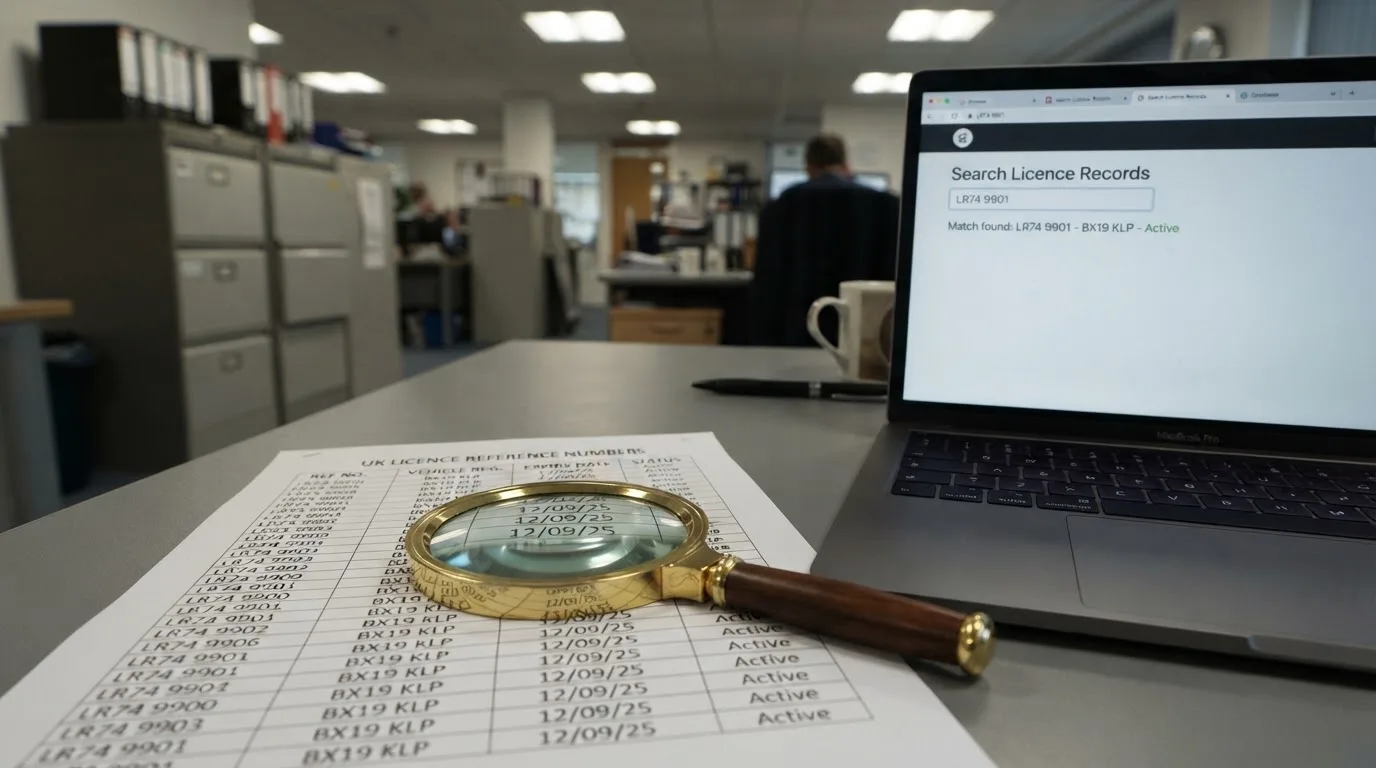
The form of a remote casino licence number on the register is account-R-number–suffix. The first six digits repeat the licence holder’s account number; the R marks a remote (online) licence; the trailing digits identify the specific licence instance and the suffix records the status revision. So 054743-R-330863-014 reads as account 54743, remote licence instance 330863, status revision 014 — which is the active licence LC International Limited operates its casino brands under. Every licence number quoted further down follows that format.
The legal frame around those 139 licences is the Gambling Act 2005, which covers Great Britain — England, Scotland and Wales — and not Northern Ireland. The Gambling (Licensing and Advertising) Act 2014 amended the 2005 Act so that any operator taking customers in Great Britain needs a Commission licence wherever it is based. A Curaçao, Maltese or Gibraltar licence is not a substitute. Since the 2014 amendment, the licence that matters is the British one.
Before the 2014 amendment, a casino licensed in, say, Gibraltar could lawfully take UK customers without a British licence, because the original 2005 Act licensed operators based on where their equipment was based. The 2014 Act changed the test to where the customer is. That single change is why a UK reader now sees familiar high-street names operating under British licences — William Hill under WHG (International) Limited, Betfred under Petfre (Gibraltar) Limited, Grosvenor under Rank Interactive (Gibraltar) Limited — while still being recognisably British brands. The corporate home is no longer the test; the licence is.
The regulator itself is the Gambling Commission — usually abbreviated UKGC — sponsored by the Department for Culture, Media and Sport. The Commission sets the rules every licensee has to honour: the Licence Conditions and Codes of Practice (LCCP), the social responsibility code, the Remote Technical Standards, and the licence conditions specific to remote (online) gambling. The minimum age for any gambling activity in Great Britain is 18. Since 7 May 2019 the Commission has required full identity verification — name, address and date of birth — before a player can make a first deposit or place a first bet, and a licensed operator cannot accept a deposit from an unverified account.
The 139-business figure on the register is therefore the upper bound of the legal market. Each of those 139 businesses can stand behind one or more of the websites a UK reader sees advertised. Some, like LC International Limited, run three or four brands from a single licence. Others, like Tek Fox Ltd behind MrQ, run one. The count of brands a reader sees at a comparison site is always smaller than the count of licences, and always larger than the count of operators running them. Knowing which is which is what the rest of this article is for.
Providing gambling to people in Great Britain without a licence is an offence under section 33 of the Gambling Act 2005. The Commission disrupts illegal sites — cease-and-desist notices, search-engine delisting, payment and hosting referrals — but has no power to order ISP blocking. There is no penalty aimed at the player on an unlicensed site, but the player loses the protection that comes with a licence: no GAMSTOP enrolment, no approved ADR for complaints, no recourse to the Commission if a withdrawal is delayed or refused. What the player saves on a site without a GB licence is, in plain terms, friction they cannot later claim back.
That consequence — what an unlicensed site costs in protection — is the reason the licence number is the first thing to check, and the reason the ten operators below all carry one. The register is the test; everything else is downstream of it.
Inside the register’s fundamentals: 1,065 active and 361 white-label domain entries
The register’s domain list records each website against the licence account that runs it, with a status of Active, Inactive or White Label. On 18 September 2026 the domain list held 1,065 active entries and 361 white-label entries — a white-label site trading under another company’s licence, the same way a supermarket’s own-brand cereal sits on the same supply chain as a named brand. The two counts together exceed the 139-business figure, sometimes by an order of magnitude, because one licence can run many websites.
That distinction — 139 licences, 1,426 domain entries — is what catches readers out. A search for “PayPal casinos UK” returns brand names; the register returns licence holders. The two are not the same list, and they do not have a one-to-one mapping. Coral and Gala Bingo are different brands with different websites and different cashier pages, but they sit on the same licence, 054743-R-330863-014, run by LC International Limited. Jackpotjoy and Virgin Games sit on another shared licence, 038905-R-319430-022, run by Gamesys Operations Limited; Virgin Games is specifically a white-label tenant of that licence, which means Gamesys is the licensed operator and Virgin Games is a brand trading on its licence account.
The practical consequence for a player is that the responsible-gambling framework — GAMSTOP, the £5/£2 stake caps, the mandatory ID check, the financial vulnerability check — applies identically across all the brands on a single licence, because they are all running the same compliance infrastructure on the same corporate books. The cashier, the bonus structure and the game selection differ; the licence obligations do not. Choosing between Coral and Gala Bingo is choosing between two front doors on the same building.
The white-label status is the more interesting of the two domain categories. A white-label site is, in plain terms, a brand that does not itself hold the licence — it pays another operator to run the licence for it. The licensed operator is responsible for compliance; the white-label brand is responsible for marketing, customer acquisition and the player-facing product. When a dispute arises, the player escalates to the licensed operator. The register’s White Label column records which side of that line each site sits on. In this article’s table, only Virgin Games carries that status among the ten brands reviewed.
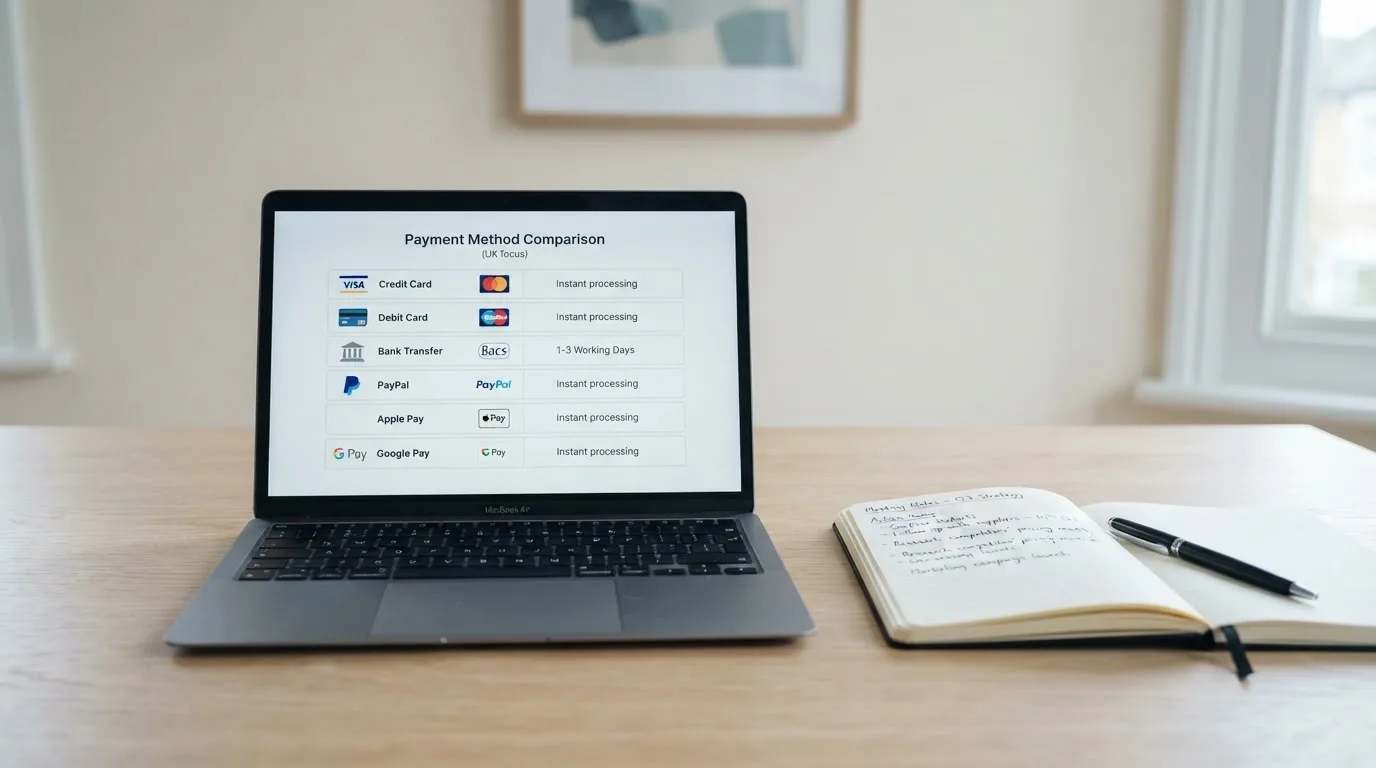
The register’s domain list also does not record payment methods. A search for “all PayPal casinos UK” is not a question the register can answer, because the register records the licence, the holder and the domain status — not which e-wallets, cards or bank-transfer rails the cashier exposes. That is why the comparison table below uses the register’s own columns (brand, licence holder, licence number, domain status) and marks the payment-method column with a dash rather than guessing what each cashier carries. The cashier is the only place that question can be answered, and the register does not see inside it.
What the register does record, which matters for a reader comparing brands, is the licence pedigree. A brand running on a long-standing UK-licensed operator with multiple iterations of its licence suffix has more compliance history than a brand running on its first iteration. Betfred’s licence 039544-R-319290-010 carries suffix -010, which means ten revisions of that licence instance have been recorded with the Commission; MrQ’s licence 060629-R-337532-004 carries suffix -004, four revisions. The revision count is not a quality grade, but a longer revision history is what the register shows when an operator has had time to be fined, to change its terms, and to be re-licensed — which is the kind of paper trail a player worried about withdrawal disputes might want to see.
Responsible gambling at a UK PayPal casino: GAMSTOP, stake caps and the ID check
Every UK-licensed remote casino carries the same responsible-gambling load, and PayPal changes none of it. The framework is mandatory and runs across a stack of interlocking rules that bite in different ways.
GAMSTOP, the national online self-exclusion scheme, has been a condition of every online licence since 31 March 2020. Players register for six months, one year or five years, and the exclusion cannot be cancelled early. A registered player cannot deposit, even via PayPal, at any UK-licensed operator — the cashier rejects the deposit before the funds leave the wallet. There is no per-brand opt-out; the exclusion applies across the whole licensed market. A player who has self-excluded and then attempts to gamble at a PayPal casino hits the wall at the deposit step, not at the cashier.
The slot stake caps came in two tranches in 2025. Since 9 April 2025 the maximum stake per game cycle for adults — players aged 25 and over — has been £5. Since 21 May 2025 the maximum stake per game cycle for younger adults — players aged 18 to 24 — has been £2. A “game cycle” is the unit the slot uses to decide an outcome: one spin on a standard slot. The cap applies whether the player stakes via PayPal or any other method; it is a game-engine setting the operator configures, not a deposit-side rule. Players who try to spin at higher stakes see the stake button grey out at the cap.
A slot spin may not be faster than 2.5 seconds, and auto-play is banned. Both rules have applied since 31 October 2021. Losses disguised as wins — slot animations that celebrate a payout smaller than the stake — are banned outright. The combination is meant to slow the cognitive loop the slot runs on the player. PayPal is irrelevant to these rules: the spin interval and the loss-disguised-as-win check are inside the game, not at the cashier.
Identity verification is the load-bearing leg. Since 7 May 2019 the Commission has required full identity verification — name, address and date of birth — before the first deposit or any play at a licensed operator. A PayPal deposit does not satisfy this check on its own, even though PayPal already holds the player’s verified identity at the e-wallet level. The operator must run its own check against the player’s name and address; the deposit only proceeds once the operator’s verification has cleared. This is the single biggest reason a PayPal withdrawal can be slow: the same check that gates the first deposit is also what blocks the first withdrawal until it is complete.
A further rule applies to deposits themselves. There is no state-set deposit or loss ceiling in Great Britain; operators must prompt a player to set a financial limit before the first deposit, and the rule took effect on 31 October 2025. A player can set any limit, including zero, and the operator must honour it. Beyond that, financial vulnerability checks run at £150 net deposits in a rolling 30-day window, using public data, and the wider financial risk assessments the Commission has announced are not yet in force. PayPal transactions count toward the £150 threshold in the same way as any other deposit.
Two ancillary services sit alongside the regulatory framework. GamCare runs the National Gambling Helpline, and GambleAware funds treatment and research. Neither is an operator; both are what a player who needs help is referred to, including via the GAMSTOP exclusion confirmation email.
The consequence of the framework is that a “PayPal casino” in the UK is, by definition, a casino bound by all of the above. A reader looking for an anonymous deposit, a high-stake slot or a way around a self-exclusion is not looking at the UK-licensed market at all. The licensed market looks the way it does because PayPal, the licence, the ID check and the stake cap all sit on top of the same player account. Removing any one of them is not a PayPal choice; it requires leaving the licensed market.
PayPal is not the anonymity play some readers assume
Some search terms around this subject — “PayPal casino no verification UK”, “PayPal casino anonymous”, “PayPal casino no ID” — imply that PayPal delivers a different kind of deposit than a debit card. It does not. PayPal is a regulated e-wallet, not a privacy tool, and it offers no extra anonymity at a UK-licensed casino.
The structural reason is the licensing regime. A UK-licensed operator must verify the player’s name, address and date of birth before the first deposit, and that obligation runs against the operator, not the payment method. PayPal already has the player’s identity on file, but the operator still has to run its own check; the casino cannot accept a deposit from an unverified account, regardless of how the funds arrive. A PayPal deposit that bypassed the operator’s ID check would put the licence at risk. No licensed operator treats PayPal as a verification substitute.
The second reason is PayPal’s own status. PayPal is regulated as a bank in Luxembourg (since 2008) for its European and UK-facing operations, and as an e-money institution across the markets it operates in. PayPal’s terms require users to register under their real identity, and PayPal cooperates with law-enforcement information requests. There is no anonymous PayPal account in the sense of “no name attached” — and there cannot be, because the Luxembourg banking licence would not survive it.
The third reason is that offshore sites that market themselves as “no verification PayPal casinos” are operating outside the British regime. The Gambling Act 2005 (through the 2014 amendment) requires any operator taking UK customers to hold a Commission licence; an unlicensed site taking a £10 PayPal deposit from a player in Manchester is committing an offence under section 33 of the Act. The Commission can disrupt such sites — cease-and-desist, delisting, payment referrals — but cannot block them at ISP level. The player on such a site loses GAMSTOP enrolment, ADR access and the Commission’s complaints route — the same protection gap as any unlicensed site, with the added twist that the PayPal transaction itself leaves a PayPal-side audit trail.
The fourth reason is the credit-card ban. Since 14 April 2020, credit cards have been banned for gambling in Great Britain, and that includes credit cards funded through e-wallets. A PayPal deposit at a UK-licensed casino cannot have been funded by a credit card — PayPal blocks the funding path — so the privacy property some readers imagine (“use a credit card through PayPal and the casino never sees the card”) does not exist. The casino sees a PayPal-funded deposit, and PayPal sees a debit-card or bank-funded wallet top-up.
So the practical answer to “is PayPal anonymous at a UK casino” is no. PayPal is a faster, more standardised way to move money in and out of a licensed operator — which is precisely what makes it attractive at the cashier — and that is the whole of the proposition. Players who want anonymity are not in the licensed market at all, and the unlicensed market is exactly where PayPal’s traceability works against them.
Payout speed and what verification actually costs you in time
PayPal’s reputation as a fast-payout method is real, but it is conditional on verification clearing first. The pipeline at a UK casino has four steps, and they do not all run at PayPal’s speed.
The deposit lands in seconds. A PayPal deposit at a UK cashier is confirmed by PayPal’s own authorisation, and the funds appear in the casino balance immediately or near-immediately depending on the operator’s processing. The player can begin playing within seconds of clicking deposit. There is no upper limit on deposit speed imposed by PayPal; the cashier may impose a minimum (often £5 or £10) and the payment provider may impose its own maximums for a single transaction.
The ID check blocks the first withdrawal. The first withdrawal at any UK-licensed operator waits until the operator’s verification has cleared. The Commission requires name, address and date of birth to be verified before any first withdrawal, and most operators also run source-of-funds checks at higher cumulative withdrawal amounts. PayPal does not skip this step, even though PayPal already holds the player’s identity at the e-wallet level — the operator has to run its own check, and the cashier waits for it.
Once the ID check is clear, PayPal withdrawals settle fast. The settlement time depends on the operator’s own internal processing, but a verified PayPal withdrawal typically arrives in the PayPal balance within hours rather than days. Bank transfers, by contrast, can take one to three working days once the casino has approved them; debit-card withdrawals are usually one to three working days too. PayPal is the fastest of the three at the withdrawal step, and that is the actual source of the e-wallet’s reputation for fast payouts.
The verification cost in time can be measured in hours. A player who deposits via PayPal, plays for an hour, then requests a withdrawal may wait 24 to 72 hours for the verification to clear on the operator’s side, then another few hours for the PayPal transfer to settle. After the first cycle, subsequent withdrawals settle faster because the verification is already on file. “PayPal is fast” is true for the recurring case; for the first withdrawal at a new operator, it is no faster than any other method.
The 1,065 active and 361 white-label domain entries on the Gambling Commission’s register speak to this pipeline in a roundabout way. Each domain is a separate cashier — separate verification, separate bonus structure, separate game library — running on a licence that may be shared with other domains. A player who has verified at one Gamesys domain has, in principle, a head start on verification at another Gamesys domain; in practice each operator runs its own verification, and the player’s documents have to be re-submitted per domain. The 361 white-label entries in particular are a reminder that the brand a player sees at the cashier may not be the entity holding the licence, and that the dispute-resolution path runs through the licensed operator rather than the brand.
PayPal’s competitive position at the cashier is therefore narrow. It is not the only fast withdrawal method (a few operators now offer Visa Fast Funds or instant bank transfers), and it is not always the cheapest for deposits (PayPal charges the merchant a fee, which the operator may or may not pass on). What PayPal reliably offers is a consistent experience across operators: the same wallet, the same login, the same buyer-protection terms. That consistency, more than the per-transaction speed, is what makes it a default choice for players who use it for everything else.
How the ten licensed operators stack up on the register
The ten brands below are drawn directly from the Gambling Commission’s public register; they are not a PayPal-specific ranking, because the register does not record payment methods, and they are not a recommendation. They are ten active UK-licensed remote casino brands, ordered by recognition rather than any quality grade, and the table below uses the register’s own columns. The “PayPal support” column reads as a dash for every entry: this is the article-language no-data marker, and it is honest about what the register can and cannot verify.
| Casino brand | Licence holder | GB remote casino licence | Domain status | PayPal support |
|---|---|---|---|---|
| Coral | LC International Limited | 054743-R-330863-014 | Active | — |
| Betfred | Petfre (Gibraltar) Limited | 039544-R-319290-010 | Active | — |
| Jackpotjoy | Gamesys Operations Limited | 038905-R-319430-022 | Active | — |
| Unibet | Platinum Gaming Limited | 045322-R-324275-019 | Active | — |
| William Hill | WHG (International) Limited | 039225-R-319373-015 | Active | — |
| BetVictor | BV Gaming Limited | 039576-R-319370-028 | Active | — |
| Gala Bingo | LC International Limited | 054743-R-330863-014 | Active | — |
| Virgin Games | Gamesys Operations Limited | 038905-R-319430-022 | White-label | — |
| Grosvenor Casinos | Rank Interactive (Gibraltar) Limited | 057924-R-334666-005 | Active | — |
| MrQ | Tek Fox Ltd | 060629-R-337532-004 | Active | — |
Three observations the table makes plain.
Ten brands compress to fewer operators than a reader might expect. Coral and Gala Bingo both sit on LC International’s licence (054743-R-330863-014); Jackpotjoy and Virgin Games both sit on Gamesys’s licence (038905-R-319430-022). The “ten casinos” the search returned are in reality seven distinct licence holders running ten brand fronts. A reader comparing them on game library or bonus structure is comparing brand surfaces, not operating entities.
Three of the seven licence holders — Petfre (Gibraltar), Rank Interactive (Gibraltar) and WHG (International) — sit outside the UK for corporate purposes, but all hold active remote casino licences issued by the Commission. The 2014 amendment made the corporate home irrelevant; the licence is what matters. A reader worried about a Gibraltar-registered operator is asking the wrong question. The question is whether the licence number resolves on the Commission register, which all three do.
The suffix on each licence instance (the trailing -014, -010, -022 and so on) records the number of revisions the licence has gone through. MrQ’s -004 reflects a newer operator; Betfred’s -010 and Coral’s -014 reflect older brands with longer compliance histories. The revision count is not a quality grade, but it is a rough proxy for the operator’s record under the Commission’s licence conditions. BetVictor’s -028 is the longest in the table — twenty-eight revisions, reflecting the operator’s arc from offshore incorporation back to a UK Ltd under the post-2014 regime.
The dashes in the PayPal support column are deliberate. The register does not record payment methods, and this article does not assume which cashier lists PayPal. A player who wants to confirm PayPal at a specific brand needs to check the cashier at that brand directly. What the register does guarantee — that the brand sits behind a Commission-licensed operator with all the responsible-gambling obligations attached — is what the rest of this article is about.
The ten licensed operators, one by one
Coral: the high-street brand of LC International’s trio
LC International Limited (account 54743) runs Coral from the same active remote licence, 054743-R-330863-014, that also covers Gala Bingo and Ladbrokes. Coral is the highest-recognition brand of the three; what a player gets is the framework every UK-licensed site has to honour — GAMSTOP, the stake caps, the ID check, the financial vulnerability check — delivered under a household name that has been operating in Britain since the 1920s. The licence suffix -014 is the longest in this table, which is a paper trail of compliance revisions under the Commission.
Verdict: Coral is the brand a UK reader recognises first, and the licence pedigree is the point. Where it does not stand out is on the dimensions a cashier page decides, which the public register cannot verify. Picking Coral over the other LC International brands is a choice of which front door to use on the same compliance building.
Betfred: a Gibraltar company under a GB licence
Petfre (Gibraltar) Limited (account 39544) runs Betfred under active remote casino licence 039544-R-319290-010. The Gibraltar incorporation is the corporate home of the operator, not a substitute for the British licence — the 2014 amendment made that clear. Fred Done founded the business in 1967 as a single shop in Salford, and the company has grown into one of the largest independent bookmakers in the country; the online casino is the most recent addition to that footprint. The licence suffix -010 puts Betfred in the second-longest compliance history of the table.
Verdict: Betfred’s case is the cleanest illustration of what the post-2014 regime looks like in practice. A Gibraltar company, a Gibraltar-incorporated licence holder, and a fully British licence — the corporate home and the licence have been deliberately separated by the amendment, and Betfred is what that separation looks like at scale.
Jackpotjoy: the Gamesys side of a shared licence
Gamesys Operations Limited (account 38905) runs Jackpotjoy under active remote casino licence 038905-R-319430-022. Gamesys is the operator behind both Jackpotjoy and Virgin Games, with Virgin Games as the white-label tenant on the same licence instance. Jackpotjoy is the more established of the two brands; Gamesys has run bingo-led products under the Jackpotjoy name since the early 2010s and added casino products under the same umbrella. The licence suffix -022 is the second-longest in this table after BetVictor’s, reflecting the most-revised licence instance among the multi-brand holders.
Verdict: Jackpotjoy is the primary brand on a heavily-revised licence, with the operator’s full compliance infrastructure behind it. The brand is the more bingo-flavoured of the Gamesys pair; the casino-specific Gamesys product sits on the same licence instance under Virgin Games. The longer paper trail a revised licence represents is the register’s record of the operator’s full compliance arc.
Unibet: a Kindred brand on a UK remote licence
Platinum Gaming Limited (account 45322) runs Unibet under active remote casino licence 045322-R-324275-019. Platinum Gaming is the UK operating entity of the Kindred Group, the Stockholm-listed parent that also runs brands in other European markets. Unibet’s UK site is one of the more internationally diversified brands on the register; the licence suffix -019 reflects a long compliance history under the Commission. The site carries both casino and sportsbook products, which is unusual among the brands in this table.
Verdict: Unibet is the international-holding-company case in this list, with a UK licence that has been through nineteen revisions. The casino-and-sportsbook bundle under one licence instance is the operator’s distinguishing product shape. The responsible-gambling framework on the cashier is identical to every other brand on the table, because the licence makes it so.
William Hill: the oldest name, the newest owner
WHG (International) Limited (account 39225) runs William Hill under active remote casino licence 039225-R-319373-015. William Hill the brand dates from 1934; WHG (International) Limited is the post-2021 licence holder after Caesars Entertainment’s takeover of the European William Hill business. The “International” in the holder name is a flag for the corporate structure rather than a flag for the licence status: the licence is a British one, issued by the Commission, and the operator has been on the register across multiple corporate reorganisations.
Verdict: William Hill is the case where the brand’s age and the licence holder’s history are two different stories. The brand is one of the oldest in the market; the corporate entity currently behind it is comparatively new. The licence suffix -015 reflects a long compliance history under successive holders, which is the register’s record of those reorganisations rather than a flag against the current operator.
BetVictor: a family-business name behind a UK Ltd
BV Gaming Limited (account 39576) runs BetVictor under active remote casino licence 039576-R-319370-028. BetVictor is the renamed online operation of Victor Chandler’s bookmaking business, which moved from a UK base to Gibraltar in the late 1990s and back to a UK base after the 2014 amendment. BV Gaming Limited is the UK Ltd that operates the brand now, and the licence suffix -028 is the longest on the table — twenty-eight revisions reflecting the operator’s full arc from offshore to onshore.
Verdict: BetVictor’s licence suffix is the operator’s history told in digits — twenty-eight revisions, including the post-2014 transition. The brand carries offshore origins and an onshore licence, and that combination is precisely the transition the 2014 amendment was designed to force. The longer revision history is what the register records when an operator has been re-licensed multiple times.
Gala Bingo: the bingo front on Coral’s licence
LC International Limited runs Gala Bingo from the same active remote licence as Coral — 054743-R-330863-014. The two brands share the operator, the licence, the compliance infrastructure and the responsible-gambling framework, but their product focuses differ: Gala Bingo is the bingo-led product, Coral is the casino-led product. The two brands cross-sell to the same player pool, which is the corporate point of holding both on one licence.
Verdict: Gala Bingo is the bingo-led front on Coral’s licence; the player gets the same compliance umbrella either way. The choice between the two brands is the choice of which product surface to play on — bingo here, casino there — rather than which operator to trust. Coral and Gala Bingo are two front doors onto the same compliance building, with different shop windows.
Virgin Games: the white-label tenant of Gamesys
Gamesys Operations Limited is the licensed operator; Virgin Games is the white-label brand trading on Gamesys’s licence, 038905-R-319430-022. The two are not the same entity, and the register’s White Label column marks the difference. Gamesys runs the compliance, the cashier plumbing, the responsible-gambling framework and the licence obligations; Virgin Games runs the marketing, the player acquisition and the brand surface. When a player has a dispute, the escalation path runs through Gamesys, the licensed operator — not through the Virgin brand directly.
Verdict: Virgin Games is the cleanest white-label example in the table. The player gets the Gamesys licence and compliance framework; the player does not get a separate licence behind the brand. That is not a downgrade — it is the structure of white-label arrangements — but the direct line-of-sight to the licence holder is shorter at Jackpotjoy, the same operator’s primary brand.
Grosvenor Casinos: a land-based operator’s online arm
Rank Interactive (Gibraltar) Limited (account 57924) runs Grosvenor Casinos under active remote casino licence 057924-R-334666-005. The Rank Group is one of the UK’s largest land-based gambling operators — it owns the Grosvenor casino estate on the high street and the Mecca Bingo brand — and the online arm is the Gibraltar-incorporated Rank Interactive (Gibraltar) Limited. The licence suffix -005 is comparatively short, which reflects the more recent build-out of the online casino product compared to the long-established land-based operation.
Verdict: Grosvenor is the omnichannel case in this list: a player who has visited a Grosvenor casino on the high street can recognise the brand online, but the licence holder is the Gibraltar-incorporated online arm, not the UK land-based operator. The compliance framework is identical because the licence is one.
MrQ: the independent at the smaller end
Tek Fox Ltd (account 60629) runs MrQ under active remote casino licence 060629-R-337532-004. MrQ is a smaller independent operator; the licence suffix -004 reflects a younger compliance history than the brands with longer revision trails. The brand is the only one in this list whose licence holder is a UK Ltd with no parent-company name — Tek Fox Ltd is the operator, not a subsidiary.
Verdict: MrQ is the independent case in this list. Tek Fox Ltd is the licence holder with no parent-company name behind it, which makes MrQ’s licence the most direct line from brand to operator in the table. The shorter compliance history is not a quality grade; it is the natural state of a younger operator on the register.
How long the 10x bonus cap actually takes to clear
The 10x wagering requirement cap took effect on 19 December 2025 and applies to every UK-licensed casino bonus. A player who claims a £100 welcome bonus under the new cap must turn over £1,000 in slot play before any of the bonus can be withdrawn. The arithmetic of how long that takes is set by two numbers: the bonus amount and the stake-per-spin the player chooses.
At the £5 stake ceiling that applies to adults aged 25 and over, a £1,000 turnover works out at 200 spins. At a five-second-per-spin pace — twice the legal 2.5-second minimum spin interval — those 200 spins take roughly seventeen minutes. At the £2 stake ceiling that applies to 18-to-24-year-olds, the same £1,000 turnover works out at 500 spins, which at the same five-second pace takes about forty-two minutes. Both ends of the band assume the player only stakes the bonus amount once and that the slot does not slow the spin interval below the pace the player is clicking at.
The band scales linearly with the bonus amount. A £250 welcome bonus at 10x means £2,500 of slot turnover, which lands at roughly forty-two minutes at the £5 stake ceiling and an hour and three-quarters at the £2 ceiling. A £500 welcome bonus at 10x means £5,000 of slot turnover, which runs from about an hour and a quarter at the £5 stake ceiling to three and a half hours at the £2 ceiling. The clock on the bonus is a function of the bonus size and the stake ceiling, full stop.
What the cap does not do is control the cost of clearing the bonus. The 10x cap is on turnover, not on expected loss; the slot’s return-to-player figure is unchanged, and the house edge on £1,000 of play is whatever the slot’s RTP implies. The cap is a time-saver at the upper end of the market — pre-cap wagering requirements of 30x, 40x or 65x stretched bonus clearing into multi-day sessions — but it is not a player-friendly rule in the cost sense. A player reading a “10x wagering” headline and assuming the bonus is cheap is reading the rule backwards.
The cap also bans mixed-product bonuses — offers like “bet on sport, get casino spins” — which used to let operators move players from low-margin products to high-margin slots under the same bonus. A player who sees a casino-only bonus at a UK-licensed operator in 2026 is looking at the 10x cap, nothing else. Anything more elaborate would not be legal.
Frequently asked questions
Are there UK-licensed casinos that take PayPal deposits?
Yes. PayPal resumed processing gambling payments in 2010 in jurisdictions where online gambling is regulated, and Great Britain is one of them. Any UK-licensed operator may host PayPal at the cashier; the Commission’s register is where a reader verifies the licence, not the payment method. The cashier itself is where the player confirms PayPal is offered, and that has to be checked brand by brand.
Which licensed UK casinos work best for PayPal?
The register does not record payment methods, so the ten brands in this comparison share the same compliance framework rather than the same cashier experience. The places where licensed casinos genuinely differ on PayPal are the verification turnaround for the first withdrawal and the operator’s own processing time after that — neither of which the register records. A player comparing brands on PayPal should look at the operator’s terms page rather than the licence status.
Are PayPal deposits subject to the same UK limits as any other method?
Yes. The £5 per-spin ceiling for adults and the £2 ceiling for 18-to-24-year-olds apply to the slot, not the payment method; the deposit limit the player sets at sign-up applies across funding routes; GAMSTOP blocks PayPal deposits the same way it blocks debit-card deposits. PayPal is a payment rail, not a different regulatory regime, and the rules that apply to one deposit method apply to all of them.
Can a UK player use PayPal at a casino that is not on GAMSTOP?
A casino taking UK customers without a Gambling Commission licence commits an offence under section 33 of the Gambling Act 2005, and such a site is by definition outside the GAMSTOP regime. Using PayPal does not change that legal status; the player gets no GAMSTOP coverage, no ADR route and no Commission complaints pathway, and PayPal’s own audit trail on the transaction works against the player if anything goes wrong. PayPal is a payment method, not a passport to a different market.
Does PayPal let a player skip identity verification at a UK casino?
No. The Commission requires name, address and date of birth verification before the first deposit at any licensed operator, and that obligation runs against the operator, not the payment method. PayPal already holds the player’s identity at the e-wallet level, but the operator has to run its own check. PayPal is not a verification substitute, and the first withdrawal at a UK casino is gated by the operator’s verification regardless of how the deposit was funded.
Created by the ”casinopaymentsuk” editorial team.